Key Takeaways
- Start with the fence’s job, not just its appearance.
- Match materials, posts, gates, and layout to weather exposure and daily use.
- Plan for maintenance, property lines, drainage, access, and local requirements before installation.
- A fence works as a system, so panels, footings, hardware, and gates all matter.
A fence can define a property, create a private outdoor area, contain pets, manage access, or protect equipment. The strongest choice is rarely just the most attractive panel. It is the option that best suits the property’s purpose, terrain, weather exposure, maintenance expectations, and how people use the space every day.
For property owners in central Oklahoma, Fence Concepts & Construction is an Oklahoma City fencing contractor whose website covers residential, commercial, industrial, repair, post-storm, and gate automation work. Its experience with privacy yards, security perimeters, and controlled-access projects in Oklahoma City and surrounding communities such as Edmond and Norman makes its perspective useful when evaluating materials, access needs, and demanding local conditions.
Why Fence Selection Takes More Than Picking A Style
One property can have several needs. A homeowner may want a tall, solid fence behind the house for privacy while keeping the front yard open with ornamental metal or a shorter picket-style design. A business may need visible perimeter fencing around parking areas, plus a more secure gate at a service entrance.
Before comparing colors or panel patterns, identify the primary goal: privacy, boundary definition, pet containment, child safety, curb appeal, security, or vehicle control. That decision guides every later choice, including height, spacing, material, post size, gate type, and maintenance plan.
Start With The Property’s Main Purpose
Privacy And Noise Reduction
Solid wood, vinyl, and composite panels are common choices for privacy. Height, board spacing, and placement determine how much direct sightline protection a fence provides. A solid fence can make a yard feel more secluded and may soften some nearby sound, but it will not eliminate traffic, construction, or neighborhood noise.
Security And Controlled Access
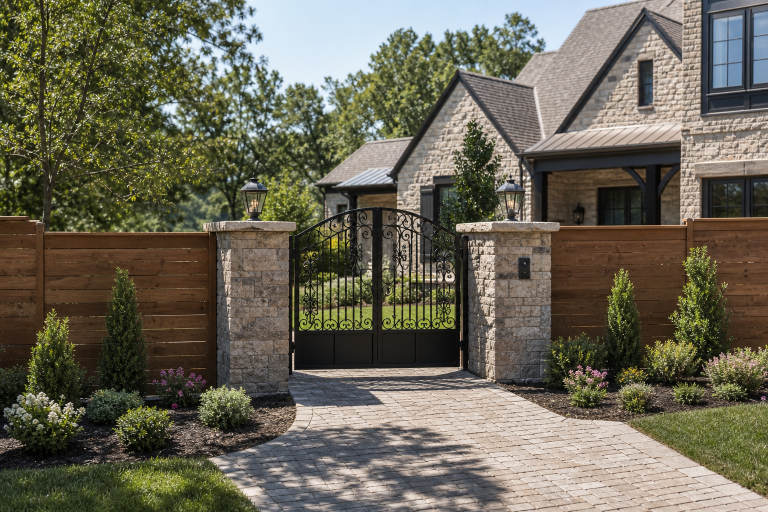
Security depends on more than height. Visibility, gate placement, latches, hinges, lighting, and how easily a perimeter can be climbed all affect results. Open-view ornamental fencing can preserve sightlines, while less transparent privacy fencing conceals the yard. Properties with frequent vehicle traffic may benefit from a rolling, swing, or automated gate designed around actual entry patterns.
Pets, Children, And Outdoor Living
Consider the animal or child who will use the area. Check bottom gaps, opening sizes, latch placement, gate height, and the tendency of a pet to dig, jump, squeeze through, or lean on a fence. Pool enclosures are a special case and may be subject to local safety rules; confirm the applicable requirements before choosing a design.
Compare Common Fence Materials
- Wood: A versatile option for traditional privacy fences and custom layouts. It needs periodic cleaning, sealing or staining, and occasional board replacement. Sun, moisture, temperature swings, wind, and fasteners all influence its lifespan. The U.S. Forest Service’s Wood Handbookoffers useful technical background on wood moisture, preservation, finishes, and outdoor performance.
- Vinyl: Provides a clean look with relatively low surface maintenance. Proper alignment, reinforced posts, and wind-conscious installation still matter, especially for solid panels.
- Chain link: A practical fit for pets, utility areas, large boundaries, and commercial sites. Galvanized and coated finishes offer different appearances, while privacy slats and security upgrades can adapt the system to the site.
- Metal and ornamental fencing:Aluminum, steel, and iron-style options create a defined perimeter while preserving visibility. Consider corrosion resistance, finish maintenance, decorative goals, and compatible gate hardware.
- Composite: Often chosen for a modern appearance and reduced upkeep. Compare costs, finishes, warranty terms, durability, and product specifications between wood and vinyl before deciding.
Plan For Oklahoma Weather, Soil, And Drainage
Heat, heavy rain, strong winds, hail, and shifting ground can all stress a fence. Exposed areas may require stronger posts, thoughtful spacing, reinforced gates, and drainage that keeps water from pooling around footings. Post depth, concrete support, alignment, and the condition of the surrounding soil are as important as the visible panels.
Wind-resilient construction focuses on secure connections and a continuous load path, principles also discussed in FEMA’s windstorm resilience guidance. No residential fence can prevent all damage in a severe storm, but careful design can reduce avoidable weaknesses.
Do Not Overlook Gates And Access Points
Gates usually receive more wear than the rest of the fence. Plan walk gates, double-drive gates, rolling gates, and automated systems early, not after panels are installed. Measure for vehicles, lawn equipment, deliveries, trash service, and possible emergency access.
- Opening width and swing or slide clearance
- Hinge strength, latch location, and post reinforcement
- Ground clearance, drainage, and slope near the opening
- Power, controls, safety devices, and manual access for automation
Common Fence Planning Mistakes
- Choosing a material before defining the fence’s purpose.
- Assuming a property line without confirming surveys, easements, or setbacks.
- Ignoring HOA rules, utility locations, and local requirements.
- Underestimating gate width or daily traffic.
- Using one design everywhere instead of matching each area to its use.
- Focusing on panels while overlooking posts, footings, and hardware.
- Selecting the lowest quote without comparing materials, installation methods, and warranty coverage.
A Simple Fence Selection Checklist
- What must the fence accomplish first?
- How much privacy and visibility are needed?
- Will it contain pets, children, equipment, or vehicles?
- How much ongoing maintenance is acceptable?
- Is the yard flat, sloped, wooded, wet, or difficult to access?
- Where are gates needed, and what must pass through them?
- Does the site face direct sun, strong wind, or heavy runoff?
- Would repair, partial replacement, or full replacement provide the best value?
When To Repair And When To Replace
An isolated broken board, a damaged hinge, a loose latch, or a single failed post may be repairable. Replacement becomes more practical when several sections are leaning, rotting, or rusting, gates repeatedly fail, posts are loose, storm damage affects multiple areas, or the existing layout no longer supports how the property works.
Frequently Asked Questions
What Is The Best Fence For Privacy?
Solid wood, vinyl, and composite are common choices. The best fit depends on budget, desired appearance, maintenance preferences, height limits, and site conditions.
What Fence Requires The Least Maintenance?
Vinyl, aluminum, and coated chain link generally need less routine surface upkeep than wood. Every fence still benefits from periodic inspections of posts, fasteners, and gates.
Can A Fence Be Installed On A Sloped Yard?
Yes. A fence can be stepped in level sections or racked to follow the grade. The slope can affect drainage, material use, labor, and whether gates will open properly.
Should A Fence Include An Automated Gate?
Automation can make sense for frequent vehicle entry, larger properties, commercial access control, or security-focused layouts. It should be planned with power, safety features, controls, and manual operation in mind.
Choose The Fence Around The Way The Property Works
A successful fence balances purpose, material, maintenance, weather, access, and long-term value. Compare options carefully, confirm site conditions, and treat the project as a complete system that includes posts, panels, gates, hardware, drainage, and ongoing care.