Table of Contents
- Introduction
- Factors Influencing Material Selection
- Common Materials and Their Applications
- Material Selection for Specific Components
- Standards and Compliance
- Conclusion
Introduction
In industrial settings, choosing the right materials for pipes, valves, fittings, and flanges is foundational to ensuring safe, efficient, and long-lasting systems. From chemical processing plants to water treatment facilities, material selection safeguards against leaks, corrosion, and costly downtime. Understanding the characteristics of every component helps engineers, contractors, and facility managers avoid premature failures and regulatory issues. When sourcing these essential components, working with a trusted industrial pipe and supply partner can streamline material logistics and ensure compliance with specifications.
When selecting materials for industrial applications, it’s crucial to consider not only the technical specifications but also the expertise required for installation and maintenance. Consulting with a professional can provide valuable insights into the best materials for your specific needs. For instance, a knowledgeable plumber summerville can guide you through the complexities of choosing the right pipe, valve, fitting, and flange materials, ensuring that your system operates efficiently and safely. This collaboration can lead to more informed decisions, ultimately enhancing the longevity and performance of your industrial systems.
The world of industrial piping is not one-size-fits-all; performance and durability depend heavily on selecting materials that can handle harsh environments, aggressive chemicals, or extreme pressures and temperatures. Failure to match the system requirements with proper materials can lead to expensive replacements or system hazards.
Beyond functionality, factors such as cost, availability, and ease of installation also play significant roles in decision-making. A comprehensive approach to selection considers not only the working environment but also future maintenance expectations and industry standards, ensuring systems remain efficient and safe for years to come.
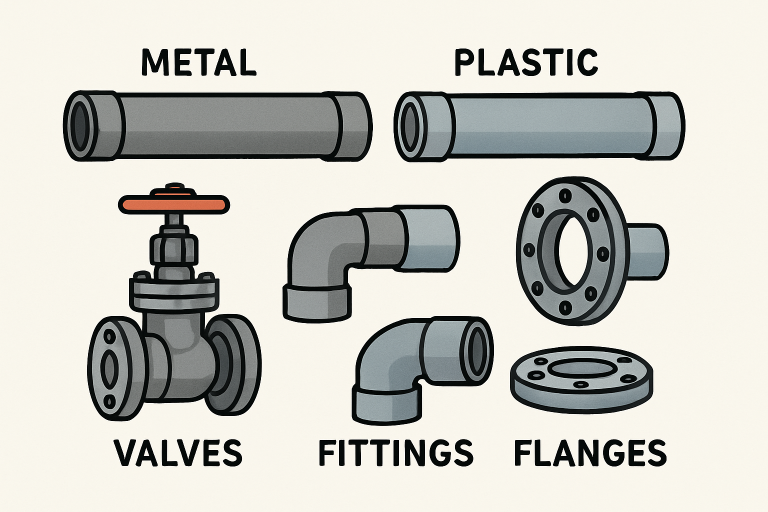
Factors Influencing Material Selection
- Corrosion Resistance: Selecting materials that can withstand chemical agents inside and outside the pipeline is critical to maximizing lifespan and minimizing risk.
- Temperature and Pressure: The material must gracefully endure the system’s maximum and minimum temperatures, as well as high-pressure loads, without cracking or warping.
- Mechanical Strength: Good physical strength ensures components resist deformation from physical forces, vibrations, or impacts within industrial environments.
- Cost and Availability: Striking a balance between technical requirements and project budgets helps drive operational efficiency and sustainability.
Common Materials and Their Applications
Material science constantly evolves, but a core set of metals and plastics remains the backbone of most industrial piping systems due to their proven durability, adaptability, and compatibility across a range of scenarios.
Metals
- Stainless Steel: Offering excellent resistance to both internal and external corrosion, stainless steel is preferred for chemical, pharmaceutical, and food processing facilities. According to Encyclopaedia Britannica, its unique alloy composition enhances durability and corrosion resistance, making it suitable for harsh environments. Its ability to operate at high temperatures and maintain structural integrity makes it essential for critical applications.
- Carbon Steel: Widely used where cost efficiency and high strength are paramount, typically in oil and gas and high-pressure steam pipelines. However, it is less suitable for highly corrosive environments unless externally coated or internally lined.
- Brass: Valued for its machinability and moderate corrosion resistance, brass is best for smaller fittings and plumbing components within potable water systems or where smooth, reliable connections are needed.
- Ductile Iron: Balancing strength and malleability, ductile iron piping is a staple in water distribution and wastewater management systems, particularly where underground or large-diameter piping is necessary.
Plastics
- PVC (Polyvinyl Chloride): Lightweight, easy to install, and resistant to a wide array of chemicals, PVC excels in low to moderate-temperature, low- to moderate-pressure applications such as cold-water distribution and non-potable systems.
- CPVC (Chlorinated Polyvinyl Chloride): A step up from standard PVC, CPVC tolerates higher temperatures and is selected for hot water or industrial chemical handling.
- PTFE (Polytetrafluoroethylene):Known for outstanding chemical resistance and non-stick properties, PTFE is the material of choice in high-purity lines and systems transporting aggressive acids or solvents.
Material Selection for Specific Components
Pipes
Pipes form the system’s backbone. In high-pressure, high-temperature environments, stainless or carbon steel pipes are indispensable, while PVC is suitable for lower-pressure water distribution where corrosion is a primary concern.
Valves
Because valves control flow and often experience the harshest service conditions, their materials directly influence reliability and performance. Stainless steel valves resist chemicals and high temperatures in process systems. Brass valves are ideal for residential applications and smaller systems, whereas plastic valves offer economical solutions for compatible chemical or low-pressure lines.
Fittings
Fittings link pipes and components together and must be compatible with both the pipe material and system conditions. Metal fittings carry high-pressure fluids securely, while plastic fittings are suited to less demanding, corrosion-prone settings such as drainage systems.
Flanges
Flanges are vital for joining pipes and connecting equipment. Stainless steel flanges are used in the harshest environments—chemical plants, refineries, and marine applications—whereas carbon steel is used for more general, lower-cost installations under stable conditions.
Standards and Compliance
Up-to-date standards help guarantee safety, interoperability, and efficiency. Choosing components that meet or exceed industry certifications—such as those from ASTM, ASME, and ISO—ensures regulatory compliance and system longevity. The Machine-interpretable Engineering Design Standards for Valve Specification offers insight into how modern specification practices integrate with digital workflows for improved engineering outcomes.
Conclusion
Thoughtful material selection for industrial pipe, valve, fitting, and flange systems is critical to maintain safe, efficient, and cost-effective operations. Prioritize corrosion resistance, mechanical strength, and compliance alongside your project’s specific needs. This approach protects investments—and lives—for years to come.