Table of Contents
- Why Young Drivers Often Pay More
- What to Check Before Buying a Car
- Choosing the Right Policy Setup
- Discounts Worth Asking About
- Can Driver Training Reduce Costs?
- How Safe Driving Builds Savings
- Coverage Choices to Review
- Common Mistakes New Drivers Make
- A Simple Insurance Checklist
- Final Thoughts
For students and first-time drivers in Ontario, car insurance can feel like one of the highest costs of getting on the road. Whether you are commuting to a college campus in Toronto, driving to work in Hamilton, or relying on a car in a smaller community with limited transit, the goal is the same: find coverage that fits your life without paying for more than you need. Reviewing Student Car Insurance options can be a practical starting point when you are comparing policy setups, vehicle choices, and available discounts.
There is no single trick that guarantees a lower premium. Costs are based on personal details, driving history, vehicle use, location, and the coverage selected. Still, young Ontario drivers can often improve their long-term insurance position by making careful choices before buying a vehicle, reporting information accurately, and building safe habits from day one.
Why Young Drivers Often Pay More
Newly licensed drivers have less time behind the wheel and a shorter insurance history for insurers to consider. A premium can also reflect where the vehicle is kept, how far it is driven, whether it is used for commuting, the car’s repair costs, and any tickets or at-fault claims on the record. A higher starting premium does not have to be permanent. Time, responsible driving, and accurate policy updates can help create better options at future renewals.
For example, a student who drives a family vehicle occasionally to campus may have very different needs from a driver who travels long distances every weekday for a job. The first driver may use fewer kilometers and be listed as an occasional driver, while the second may need coverage that reflects regular commuting and more frequent use.
What to Check Before Buying a Car
The sticker price is only one part of the cost of owning a car. Before signing a purchase agreement, request insurance estimates for the specific vehicles you are considering. A used car that seems affordable can be more expensive to insure if it is costly to repair, commonly stolen, or equipped with parts that are difficult to replace.
Questions to Ask Before Choosing a Vehicle
- Does the model have safety features that support careful driving?
- Are replacement parts readily available?
- Could the vehicle be expensive to repair after a collision?
- Will the car be financed, leased, or owned outright?
- Will you drive it mainly for school, work, or personal use?
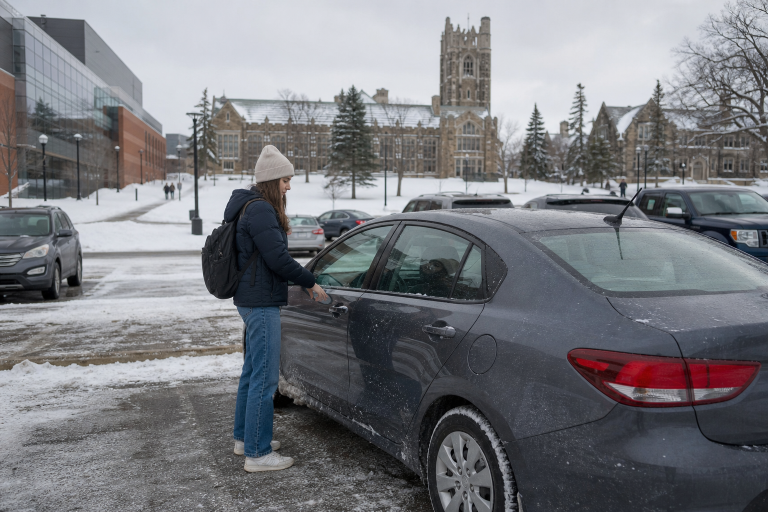
Ontario drivers should also think beyond summer driving. Snow, freezing rain, shorter winter daylight, and busy highway travel can influence how useful features such as winter tires, good visibility, and reliable brakes may be in daily life.
Choosing the Right Policy Setup
A young driver may be added to a parent or guardian’s household policy, or may need an individual policy. The appropriate arrangement depends on who owns and registers the vehicle, where the driver lives, who uses the car most often, and whether the vehicle is shared. Every regular driver should be disclosed honestly.
Incorrectly describing the primary driver, home address, annual kilometers, or vehicle use can cause serious difficulties if a claim occurs. Update the policy after moving for school, starting a new job, changing your commute, or becoming a regular user of a shared car.
Policy Details to Confirm
- Whether you are a primary or occasional driver
- The address where the vehicle is normally kept
- Estimated annual kilometres
- Work, school, or personal driving use
- Other household members who may drive the car
Discounts Worth Asking About
Discounts vary among insurers, so it is worth asking for a complete review rather than assuming you qualify automatically. Ontario’s regulator notes that insurers may offer savings related to recognized driver training, low annual mileage, multi-vehicle or multi-policy arrangements, winter tires, and certain student circumstances. Its guidance on ways to save on auto insurance also emphasizes the value of comparing options and keeping vehicle-use details current.
Potential Savings Options
- Recognized driver-training programs
- Good student or away-at-school programs, if offered
- Low-mileage options
- Multi-vehicle and multi-policy discounts
- Winter-tire discounts
- Usage-based or telematics programs are comfortable for drivers
Can Driver Training Reduce Costs?
A recognized driver-training course may help a new driver develop stronger habits and may qualify for a discount with some insurers. Confirm that the course meets the insurer’s requirements before enrolling. Training can cover hazard awareness, following distance, night driving, winter conditions, distraction prevention, and safe responses to unexpected situations.
Compare the course fee with potential savings, but do not judge the course only by the discount. The ability to identify a risky situation early, leave more space in poor weather, and make calm decisions at intersections can matter well beyond the first policy term.
How Safe Driving Builds Savings
A clean driving record is one of the most valuable assets a young driver can build. Safe driving protects people first, and it can also support lower costs over time by helping avoid convictions and at-fault claims. CAA’s advice on young driver responsibilities reinforces simple priorities such as planning ahead, avoiding distractions, and never traveling with an impaired driver.
- Put the phone away before the vehicle starts moving.
- Leave additional following distance during rain, snow, or icy conditions.
- Slow down before curves, school zones, and intersections.
- Arrange a safe ride home before a night out.
- Scan mirrors and the road ahead regularly for developing hazards.
- Follow all graduated licensing conditions.
Coverage Choices to Review
Insurance is not only about finding the lowest monthly payment. Review the protection included for damage or injury caused to others, accident-related benefits, uninsured drivers, damage to your own vehicle, theft, weather-related losses, and temporary transportation after a covered loss. A deductible is the amount you may pay toward certain claims, so choose one you could reasonably afford if something happens.
Financed or leased vehicles may come with contract requirements for physical-damage coverage. If you own an older vehicle outright, consider its current value, your savings, and your ability to replace it before deciding whether optional collision or comprehensive coverage still makes sense.
Common Mistakes New Drivers Make
- Buying a car before checking the insurance estimate
- Waiting to report a newly licensed household driver
- Assuming every driving course earns the same discount
- Underestimating annual kilometers or commute distance
- Selecting a deductible that would be difficult to pay
- Allowing someone to use the vehicle regularly without reporting it
- Forgetting to update an address after moving for school
- Comparing policies only by price instead of coverage and limits
A Simple Insurance Checklist
- Confirm your license level and restrictions.
- List all regular drivers accurately.
- Estimate yearly kilometers honestly.
- Gather vehicle ownership and identification details.
- Request estimates before purchasing a vehicle.
- Ask about student, training, winter-tire, and multi-policy discounts.
- Compare deductibles and coverage limits.
- Review the policy after a move, school change, or new job.
- Revisit coverage at each renewal.
Final Thoughts
Lower car insurance costs in Ontario usually come from several responsible decisions working together. Choose a vehicle carefully, provide complete and accurate information, ask about eligible discounts, keep coverage suited to your circumstances, and make safe driving a daily routine. Those steps can help a young driver protect both their budget and their future on the road.